The Complete Guide to Exercise Dress Care and Longevity
Quick Answer: An exercise dress typically fails in one of four places long before the main fabric wears out: the built-in bra elastic, the inner short at the inner thigh, the skirt hem, and the seam where the skirt meets the bodice. Each has a different cause and a different fix. The three care changes with the largest effect are washing cold on a gentle cycle, never tumble drying, and hanging by the shoulders rather than folding over a rail.
The outer fabric on most exercise dresses is fine after two years.
The built-in bra is usually not, and that is what makes you replace the dress.
Here is where each part actually fails, and what changes the timeline.
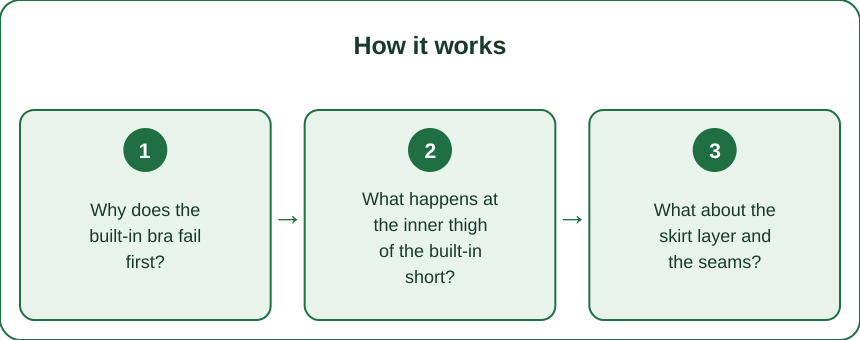
Why does the built-in bra fail first?
Because elastic degrades from heat, chlorine and body oils, and the built-in bra gets all three concentrated.
Elastane is the component that fails, and heat is its main enemy. Elastic fibres lose recovery capacity progressively with heat exposure, and the built-in bra typically has the highest elastane content of anything in the dress.
Three specific things degrade it faster than the rest of the garment:
- Tumble drying. The single most damaging thing you can do to any elastic. The combination of heat and mechanical tumbling degrades elastane far faster than washing does
- Body oils and sweat left in the fabric. Oils are not fully removed by cold water alone and accumulate in the band, where they interfere with fibre recovery over time
- Sunscreen. Frequently overlooked, and it concentrates exactly where the bra band sits. Sunscreen residue is genuinely difficult to remove and some formulations cause discolouration on top of the fibre effects
How the failure shows up: the band no longer returns to its original length after wearing. You will notice it as needing to adjust more often, then as the band sitting lower, then as visible ripple in the fabric.
What actually extends it:
- Wash after every wear rather than letting sweat sit - this is the opposite of the advice for outer layers, and it matters here
- Cold water, gentle cycle, and a mesh bag if the dress has clasps or removable pads
- Never tumble dry, at any heat setting, including the low or air setting on most machines
- Rinse quickly after chlorine exposure, even before a proper wash
A realistic expectation: with good care a built-in bra in regular rotation holds up for roughly a year to eighteen months of frequent use. With tumble drying, three to six months is common. That gap is almost entirely the dryer.
What happens at the inner thigh of the built-in short?
Friction abrasion, and it is the most predictable wear point in the whole garment.
The inner thigh area of a built-in short takes repeated fabric-on-fabric contact during every step. Over enough cycles this abrades fibres, which is what pilling is - broken fibre ends that tangle into small balls on the surface.
Fabric composition changes how fast this happens. Higher polyester content generally resists abrasion better than higher nylon content, though nylon is often softer to wear. Very lightweight inner shorts pill faster simply because there is less material to abrade.
What accelerates it:
- Washing with anything abrasive - towels, denim, and anything with zips or velcro are the main offenders
- Fabric softener. It coats fibres and reduces both moisture wicking and abrasion resistance, and it is genuinely counterproductive on athletic fabric
- A short that is slightly too tight, which increases contact pressure and therefore friction
- Running specifically, which produces far more inner-thigh contact cycles than most other activities
What helps:
- Turn the dress inside out to wash, which puts the friction on the outer surface rather than the wear point
- Wash in a mesh bag, separately from towels and hardware
- Skip fabric softener entirely on all athletic fabric
- Choose a slightly longer inner short if you run, since the contact point moves and the coverage helps
Once pilling has started it does not reverse. A fabric shaver removes the surface balls and improves appearance considerably, and it is worth doing, but the fibre damage underneath remains. Prevention is the whole game here.
What about the skirt layer and the seams?
The skirt fails at the hem, and the bodice-to-skirt seam fails from stress rather than wear.
Hem wear on the skirt is mostly about catching and snagging rather than abrasion. The hem is the outermost edge and it catches on chair edges, bag zips, car door frames and velcro. A single snag on a knit hem can run, which is a different failure from gradual wear.
Rolled and bonded hems behave differently. A bonded or laser-cut hem has no thread to break but can delaminate with heat, which is another reason tumble drying is costly. A stitched hem can be repaired; a delaminated bonded hem generally cannot.
The bodice-to-skirt seam is a stress point rather than a friction point. It carries the weight of the skirt and takes load every time you pull the dress on and off, which is the highest-force moment in the garment’s life.
How to reduce that specific stress:
- Step into the dress rather than pulling it over your head if the design allows, since overhead pulling loads that seam hardest
- Do not pull on the skirt to adjust - adjust from the waist
- Hang by the shoulders on a wide hanger rather than folding over a rail, which puts a sustained crease and load at that seam
Storage is a genuinely underrated factor across the whole garment. Folding over a thin rail creates a permanent crease line, and in bonded constructions that crease can become a weak point. Hanging by the shoulders, or folding loosely in a drawer, both work.
On repairs: a seam that has started to separate at the bodice join is worth fixing early and is a straightforward repair. Left alone it propagates, and the dress is usually otherwise fine.
Does washing frequency actually matter?
Yes, and the answer is different from what people apply to their other clothes.
Athletic fabric with a built-in bra should be washed after every wear. This is not about smell - it is about oils and salt. Sweat residue left in elastic fibres degrades them, and the built-in bra holds more of it than any other part.
The common instinct to air a dress and wear it again is a false economy on anything with structural elastic. It saves a wash and costs the elastane.
How to wash it properly, in order of impact:
- Cold water. Hot water accelerates elastane breakdown and offers no meaningful benefit for athletic fabric
- Gentle cycle, which reduces mechanical stress on seams and elastic
- Inside out, in a mesh bag, protecting the surfaces that show wear
- Mild detergent, less than you think. Excess detergent leaves residue in technical fabric, which is one of the main causes of persistent smell
- No fabric softener, ever
On the smell problem specifically, since it is the most common complaint: persistent odour in athletic fabric is usually bacteria in trapped detergent residue and body oil, not insufficient washing. The fix is usually less detergent plus an occasional soak in a solution of white vinegar and cold water before a normal wash, rather than more detergent or hotter water.
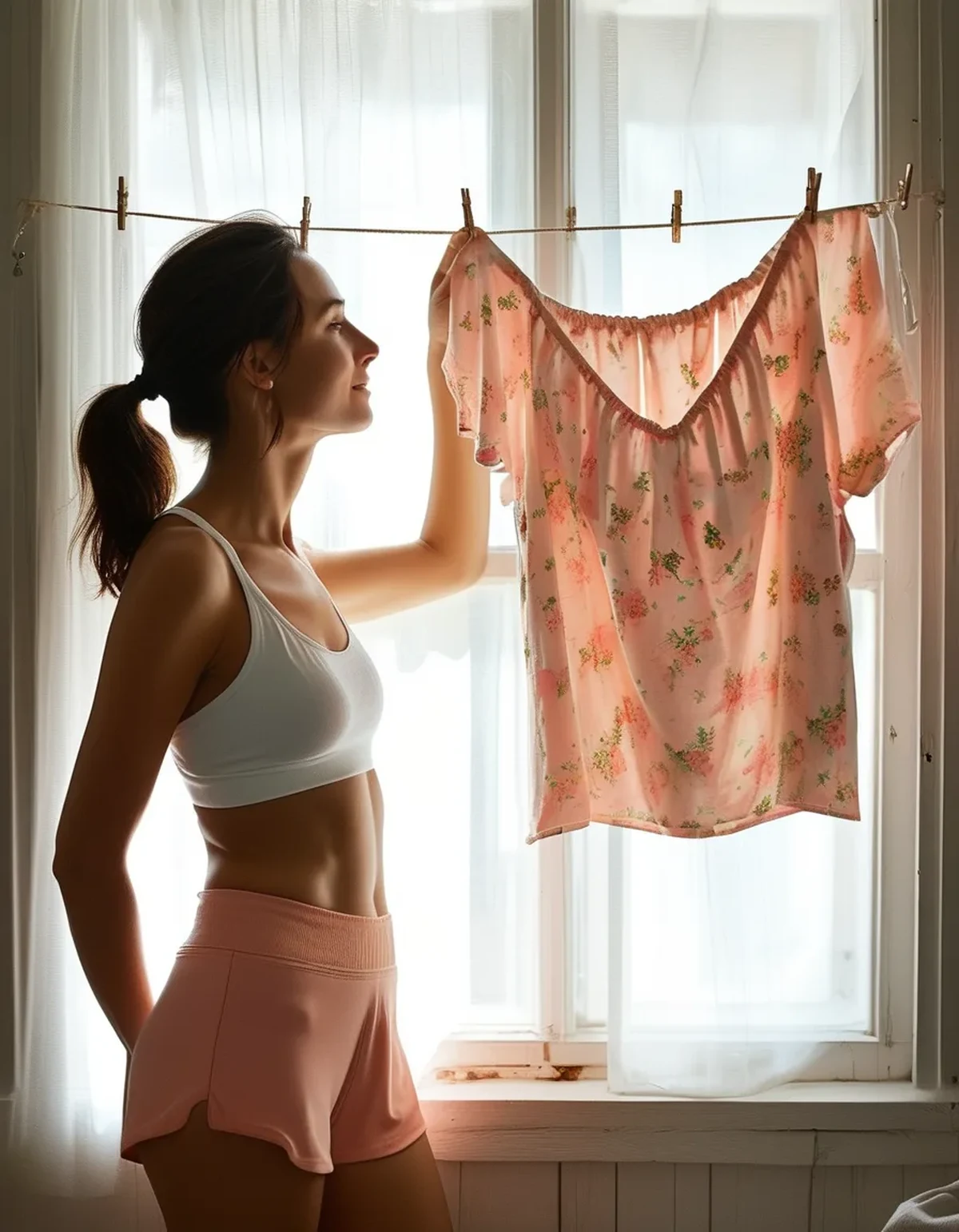
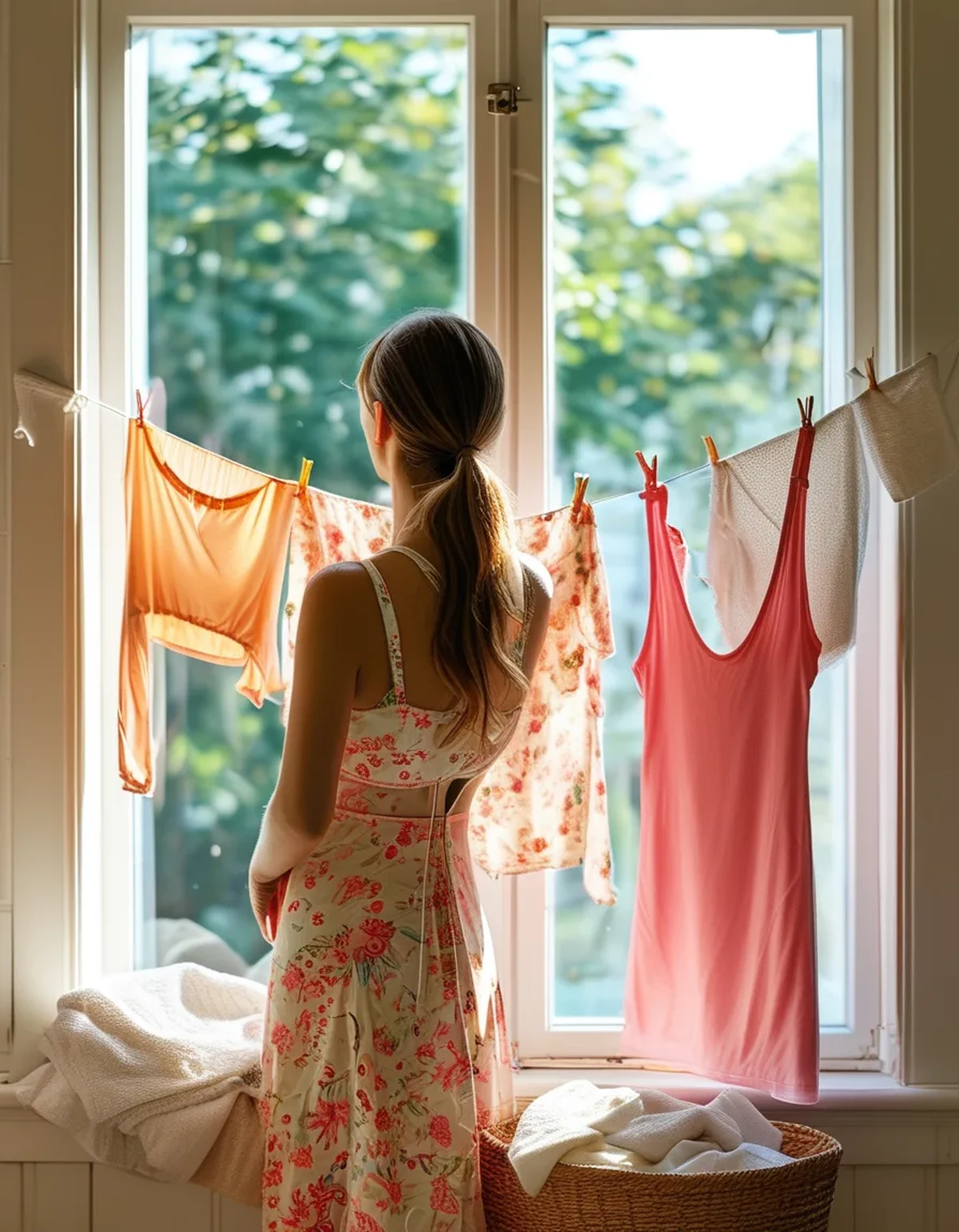
Drying is where most damage happens. Hang dry, out of direct sunlight. Direct sun degrades both elastane and colour, and the drying time saved is not worth it. A dress hung indoors overnight is dry by morning in almost all conditions.
How long should an exercise dress actually last?
Depends almost entirely on rotation size and whether it ever meets a dryer.
A realistic expectation for a dress in regular rotation with good care: eighteen months to three years before the built-in bra is the limiting factor, with the outer fabric usually still fine.
Rotation size is the biggest variable people control. Elastane recovers with rest. A dress worn and washed four times a week degrades meaningfully faster than the same dress worn once a week, and it is not proportional - the rest between wears matters in its own right. Two or three dresses in rotation last more than twice as long as one dress worn constantly.
Signs it is genuinely done rather than just tired:
- The bra band no longer returns to shape after a rest day
- Visible fabric thinning at the inner thigh, where you can see light through it
- Sagging at the bodice-to-skirt seam that does not resolve
- Loss of opacity in the skirt when stretched, which is fibre thinning rather than a wash problem
What is not a reason to replace it: surface pilling alone, which a fabric shaver largely resolves, and colour fading, which is cosmetic.
On buying with longevity in mind: check whether the bra is removable-pad or built-in-elastic construction, since removable pads survive washing better than integrated foam. Look at the inner short length and fabric weight, which predicts the friction failure. And check the hem type - stitched is repairable, bonded is not.
One practical note for the change of season: a dress going into storage for several months should be washed first and stored hanging or loosely folded, not compressed. Elastic stored under compression for months takes a permanent set, and a dress that goes away fitting can come back not fitting.
5 Care Mistakes That Shorten an Exercise Dress
1. Tumble drying, even on low. The single most damaging habit for anything with elastane. Heat plus mechanical action degrades elastic faster than any other routine exposure, and low or air settings on most machines still involve tumbling. Hang drying costs one extra evening and roughly doubles usable life.
2. Fabric softener. It coats fibres, reduces wicking, reduces abrasion resistance, and makes the smell problem worse rather than better. There is no version of athletic fabric that benefits from it.
3. Washing with towels and denim. Towels shed lint into technical fabric and denim abrades it. Zips and velcro snag knit hems. A mesh bag and an athletic-only load fixes all three at once.
4. Leaving it damp in a bag. A sweaty dress in a gym bag for a day is a bacterial culture, and the resulting smell is very difficult to fully remove. Rinse it or at minimum hang it if you cannot wash it immediately - this one is far more costly than it seems.
5. Too much detergent. Athletic fabric traps detergent residue, and the residue holds bacteria. Use roughly half what you would for cotton. The counter-intuitive fix for persistently smelly kit is usually less detergent, not more.
A sixth that catches people out: sunscreen on the bra band. It is difficult to remove, degrades elastic, and stains light fabric. Applying sunscreen a few minutes before dressing rather than after makes a visible difference over a season.
FAQ: Exercise Dress Care Questions, Answered
Can I wear an exercise dress twice before washing?
Not recommended for anything with a built-in bra. Sweat and body oils left in elastic fibres degrade them, so the wash you skipped costs you more than it saves. A dress worn only briefly and lightly is the exception.
How do I get rid of persistent smell?
Use less detergent, and try a soak in cold water with white vinegar before a normal cold wash. Persistent odour is usually bacteria living in trapped detergent residue and body oil, so more detergent and hotter water tend to make it worse.
Is it worth using a fabric shaver on pilling?
Yes for appearance, and it does not repair the underlying fibre damage. It is a cosmetic fix that buys real extra wear time on a dress that is otherwise sound.
Why did my dress lose its shape after one summer?
Most likely tumble drying, chlorine exposure without rinsing, or storage under compression. Any of the three can produce a season-long change that looks like a quality problem but is a care one.
Should I hand wash instead?
A gentle cold machine cycle in a mesh bag is close enough to hand washing for almost all athletic fabric, and far more likely to actually happen. Hand washing is only clearly better for very delicate or embellished pieces.
How many should I own?
Two or three if you wear them regularly. Rotation matters more than most people expect, because elastane recovers with rest between wears, and three dresses last considerably more than three times as long as one.
TL;DR:
- Exercise dresses fail at the built-in bra, the inner thigh, the hem and the bodice seam - rarely at the main fabric
- Never tumble dry, at any setting - it is the single biggest factor in how long the elastic lasts
- Wash cold, inside out, in a mesh bag, with about half the detergent you would use for cotton
- No fabric softener on any athletic fabric, ever
- Wash after every wear if there is a built-in bra; sweat and oils degrade elastane
- Rotation matters - two or three dresses last far more than twice as long as one
- Hang by the shoulders, and wash before long storage
The fabric usually outlives the elastic. Everything on this list is about protecting the elastic.
Keep Reading
This article is for general informational and styling purposes only. Fit, sizing, and product availability may vary.