The Complete Guide to Choosing an Exercise Dress Fabric for Every Workout Intensity
Quick Answer: Low-intensity activities (walking, light yoga) work well with lighter, more flowy exercise dress fabrics, while high-intensity activities (HIIT, running) need a heavier, higher-compression fabric with built-in shorts that actually stay put under fast, repetitive movement. Matching fabric weight to intensity affects both comfort and how long the dress lasts.
An exercise dress that feels perfect for a slow yoga flow can ride up and shift distractingly during a HIIT circuit — not because the dress is poorly made, but because it was built for a different intensity level than it’s being asked to handle.
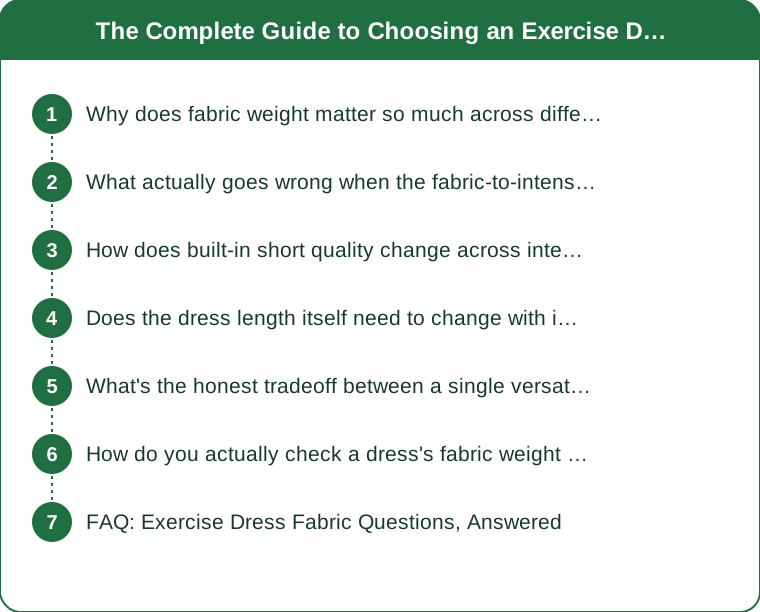
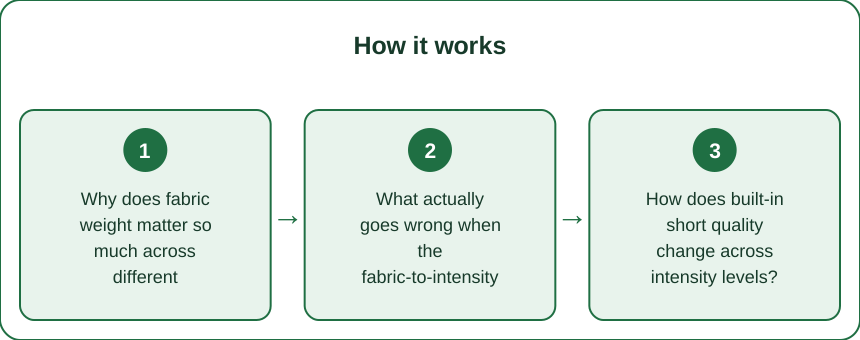
Why does fabric weight matter so much across different intensities?
Lighter fabrics move more freely and breathe better, which suits lower-intensity movement where flowy range of motion matters more than staying perfectly fixed in place. Heavier, higher-denier fabrics resist riding up and shifting during fast, repetitive movement, which matters more once intensity climbs into HIIT or running territory.
What actually goes wrong when the fabric-to-intensity match is off?
A light, flowy dress used for high-intensity training tends to ride up during squats or jumping movements, and needs frequent readjustment mid-workout — not because of poor sizing, but because the fabric wasn’t built to resist that level of repetitive force.
Conversely, a heavy, high-compression dress used for a slow walk or gentle yoga can feel overly restrictive and too warm for the actual effort level involved.
How does built-in short quality change across intensity levels?
For low-intensity activities, a thinner built-in short liner is usually sufficient since movement is more controlled. For high-intensity activities, a higher-compression, wider-waistband built-in short matters more, since fast directional changes are exactly when a thinner liner is most likely to shift or ride up.
Does the dress length itself need to change with intensity?
Shorter, more fitted hemlines tend to perform better for high-intensity movement since there’s less loose fabric to catch or shift during jumps and fast footwork. Slightly longer, more flowing hemlines work fine for lower-intensity activities where the loose movement is actually part of the appeal rather than a functional liability.
What’s the honest tradeoff between a single versatile dress and intensity-specific ones?
A single mid-weight dress can reasonably handle a range from walking to moderate cardio, but genuinely high-intensity training (HIIT, running intervals) benefits enough from a purpose-built heavier fabric and built-in short that a dedicated piece is worth it if that intensity is a regular part of your routine, rather than trying to stretch one dress across the full range.
How do you actually check a dress’s fabric weight before buying?
Look for denier or GSM (grams per square meter) listed in the product details — higher numbers indicate heavier, more compression-capable fabric, and this is a more reliable comparison point across brands than vague marketing terms like ‘four-way stretch,’ which nearly every activewear fabric claims regardless of actual weight.
FAQ: Exercise Dress Fabric Questions, Answered
Can one exercise dress really work for both yoga and HIIT?
A mid-weight fabric can bridge a moderate range, but genuinely high-intensity training benefits from a purpose-built heavier fabric and compression short rather than stretching one piece across the full spectrum.
How do I know if an exercise dress fabric is heavy enough for running?
Check the listed denier or GSM — higher numbers indicate more compression capability, which matters more for running than a lower-weight, flowier fabric.
Does a heavier fabric dress work fine for low-intensity activities too?
It can, though it may feel warmer or more restrictive than necessary for something like a gentle walk or slow yoga flow, where a lighter fabric would be more comfortable.
TL;DR:
- Lighter fabrics suit low-intensity, flowy movement; heavier fabrics resist shifting during high-intensity work
- A fabric-to-intensity mismatch, not poor sizing, usually explains riding up or restriction
- Built-in short quality matters more as intensity climbs into HIIT or running territory
- Checking denier or GSM gives a more reliable comparison than vague stretch marketing terms
The same dress style can work across intensities, but matching fabric weight to the actual workout is what determines whether it holds up or needs constant readjustment.
Keep Reading
This article is for general informational and styling purposes only. Fit, sizing, and product availability may vary.