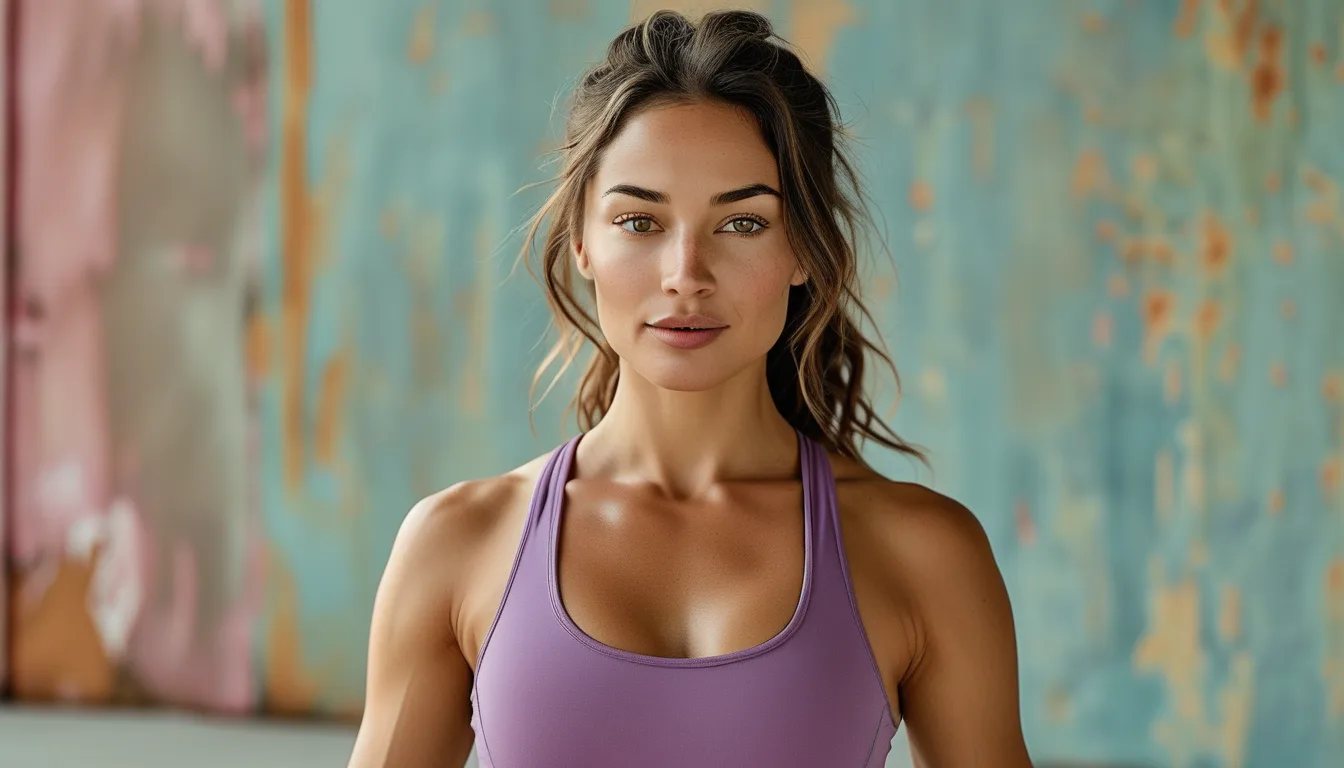
The Complete Guide to Exercise Dress Support and Built-In Bras
Quick Answer: Most built-in bras in exercise dresses are shelf bras rated for low impact only - fine for walking, golf, tennis at a social pace, and errands, and not enough for running or plyometrics. The three things that predict whether it will work for you are band tension at the underbust, whether the cups are separated or a single band of fabric, and strap width. If you are a D cup or above, plan on wearing your own bra underneath and buy the dress a size accordingly.
An exercise dress lives or dies on this one detail, and it is the detail product photos are worst at communicating. Two dresses that look identical online can be completely different garments depending on what is sewn into the top half.

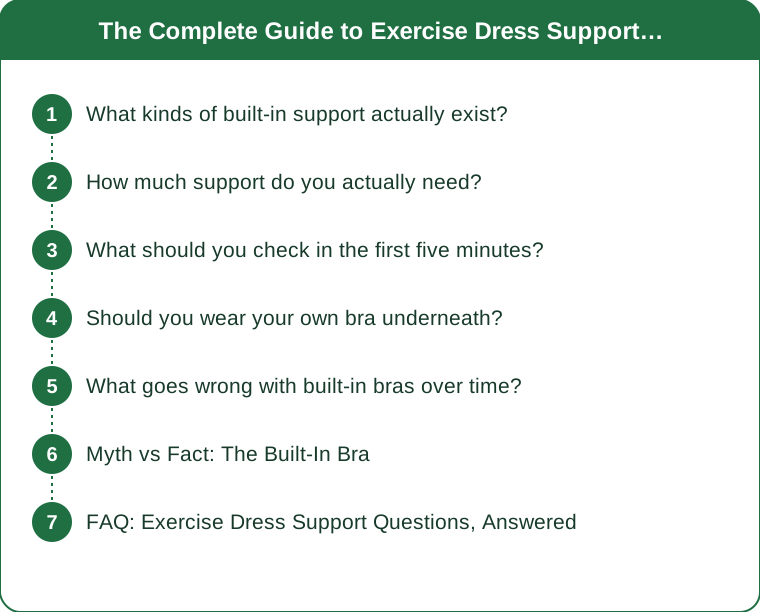
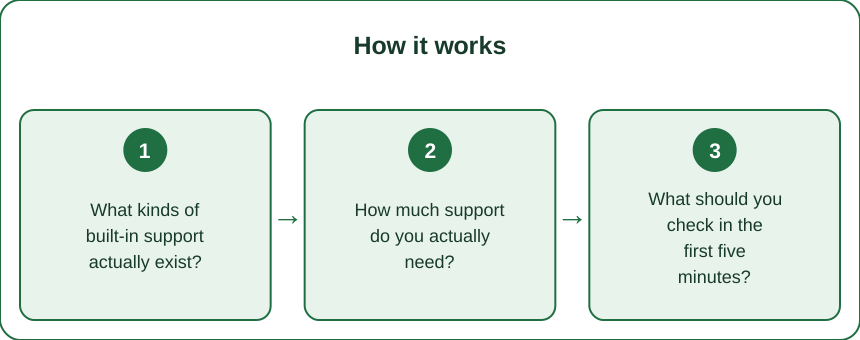
What kinds of built-in support actually exist?
There are four, and brands use the same words for all of them, so you have to look at the construction rather than the label.
The shelf bra. A second layer of the main fabric with elastic at the bottom edge. This is the most common by a wide margin. It provides light compression and modesty, and essentially no lift or separation. Support level: low impact only.
The shelf bra with removable pads. The same thing with pockets and inserts. The pads add shape and coverage, not support. They are also the part that comes out in the wash and ends up folded in half - more on that below.
The integrated compression bra. A properly constructed sports bra sewn into the dress, usually with a wider band, its own elastic, and sometimes its own strap system. Noticeably less common and usually the reason a dress costs more. Support level: light to medium impact.
The encapsulated built-in. Actual separated cups with individual construction. Rare in dresses, excellent when present, and almost always found on styles that also have adjustable straps.
The quick identification test: look at the inside photo, or reach in when it arrives. Separated cups plus a distinct band equals real support. One continuous tube of fabric equals a shelf bra, whatever the description says.
How much support do you actually need?
Match it to the hardest thing you will do in the dress, not the average thing.
Walking, errands, travel, golf, casual doubles tennis, yoga, barre. A shelf bra is genuinely fine for most people up to about a C cup. Vertical displacement is low and sustained bouncing is minimal.
Pickleball, hiking on uneven ground, singles tennis, HIIT with limited jumping. You want at least an integrated compression bra, or a shelf bra plus your own bralette underneath.
Running, jump rope, plyometrics, anything sustained and bouncing. Wear a real sports bra underneath, regardless of what is built in, regardless of cup size. Breast tissue is supported by skin and ligaments that do not regain their length, and the displacement in running is substantial - a shelf bra is simply not designed for that job.
Cup size shifts all of this down a tier. At a D cup and above, treat the built-in as a lining rather than as support for anything more active than a walk. This is not a limitation of the dress, it is a limitation of what a single layer of fabric can physically do.
What should you check in the first five minutes?
Five tests, and they take less time than reading the reviews.
The band test. Put two fingers under the elastic at your underbust. It should be snug enough that you have to work slightly to fit them, loose enough that they fit. Most of a bra’s support comes from the band, and a slack band means the dress is doing nothing.
The jump test. Jump ten times in front of a mirror. This is the most reliable single test and almost nobody does it in a fitting room. If you can see or feel significant movement, size down or plan to layer.
The reach-up test. Raise both arms overhead. If the band rides up and stays up, it is too loose or the dress is too short in the torso - and a band that rides up will do it all day.
The strap test. Straps under about 1.5cm dig in within an hour on most people. Wider is better, adjustable is much better, and racerback distributes load better than straight straps but limits what you can wear over it.
The bend test. Bend forward. This is a modesty check rather than a support one, and it is the one that determines whether you feel comfortable wearing it to a coffee afterwards.
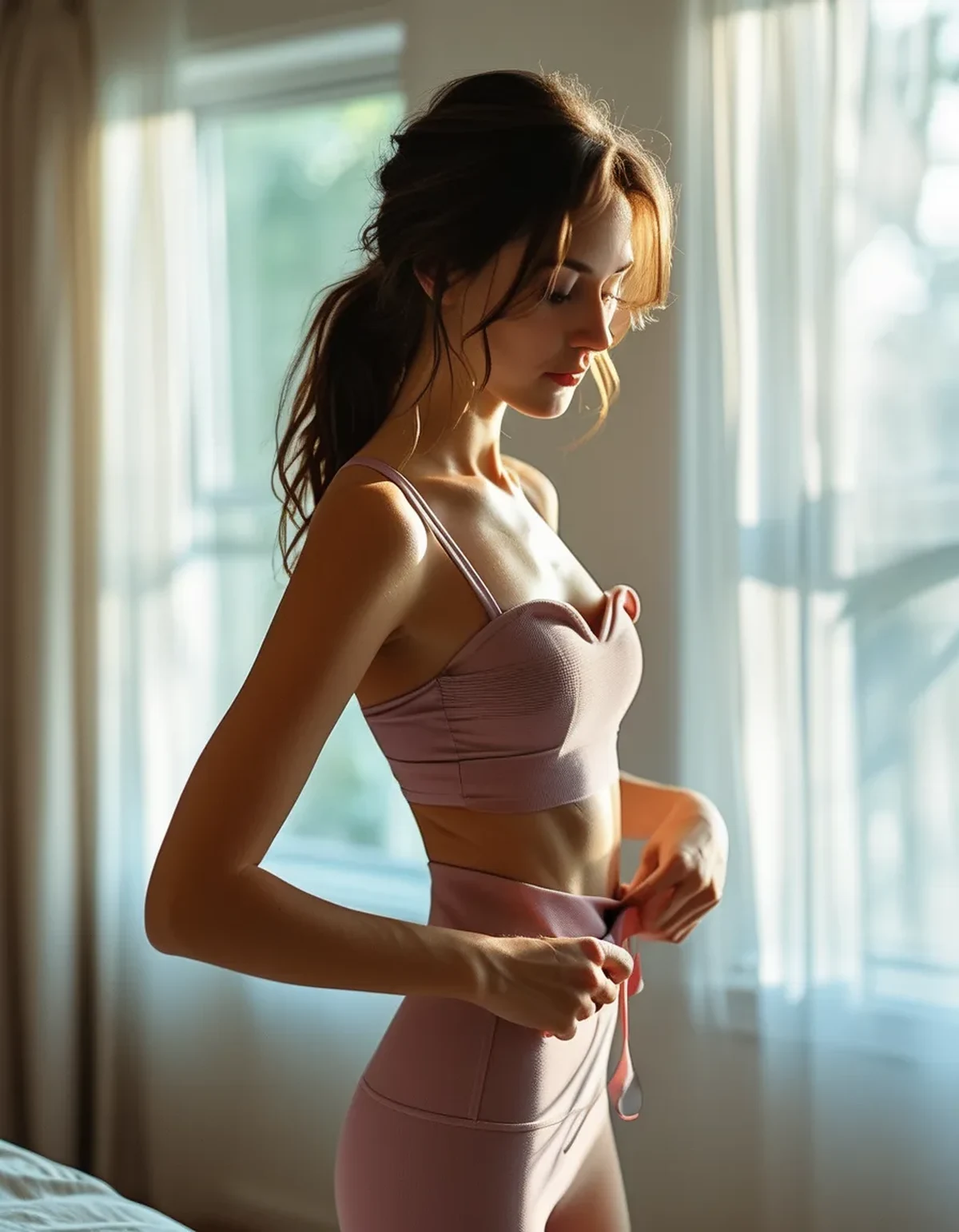
Should you wear your own bra underneath?
Often yes, and it is not a failure of the dress.
When to layer: you are a D cup or above, the activity involves running or jumping, you want a specific shape the shelf bra does not give, or the dress fits beautifully everywhere except the chest.
What to layer with. A smooth, seamless sports bra in a similar tone to the dress. Avoid anything with visible hardware, thick seams, or a contrasting racerback that will read through a light fabric. If the dress has thin straps, a strapless or convertible sports bra exists and works better than you would expect.
Size implications. Layering adds bulk at the bust, so if you are between sizes and you know you will layer, take the larger one. Buying the smaller and hoping is the single most common cause of an unworn exercise dress.
Remove the pads if you are layering. Two layers of padding is bulky, hot, and does nothing helpful. Most dresses have pockets you can simply empty, and the dress usually looks better without them once there is a real bra underneath.
What goes wrong with built-in bras over time?
Three failure modes, all preventable, all common.
The band gives out first. Elastic at the underbust takes the most cyclic stress of any part of the dress and it degrades with heat above all else. A dress washed warm and tumble dried loses band tension noticeably within a season. Cold wash, hang dry, and it holds for years.
The pads deform. Removable pads fold, twist, and end up permanently creased. Take them out before washing - every time - and lay them flat. If they are already creased, damp them and press them flat under something heavy overnight; it recovers most of them.
The shelf detaches at the side seam. Usually a manufacturing weak point rather than wear, and it usually appears in the first ten wears. It is a five-minute fix with a stretch stitch, and it is also a completely reasonable warranty claim in that window.
One more that is not a failure but reads like one: the shelf can feel tighter after a hot day. Elastic softens with heat and firms as it cools, and salt from sweat stiffens fibres slightly. A rinse resolves it.
What changes as you move into autumn
Layering over the top changes strap comfort. Once you are wearing a light jacket or a cardigan, the straps carry a little more load and thin ones start to complain sooner. This is when adjustable straps earn their money.
Cooler air means less sweat, which means less band slippage. Most people find their exercise dress fits better in September than it did in July, and this is why - a damp band slides and a dry one grips.
Long-sleeve layers underneath change the fit at the bust. A thin base layer under an exercise dress adds enough bulk to matter with a snug shelf bra. Test it before the weather forces the issue.
Fabric weight matters more now. A heavier autumn-weight dress usually comes with a slightly firmer shelf, which is a small bonus. The trade is that heavier fabric holds moisture longer, so the same dress that dried in twenty minutes in August takes an hour in October.
Myth vs Fact: The Built-In Bra
Myth: A built-in bra means you never need another bra. Fact: It means you do not need one for low-impact activity. That is a real convenience and it is a smaller claim than the marketing implies.
Myth: More compression equals more support. Fact: Compression works well up to about a C cup. Above that, encapsulation - separating and supporting each breast individually - does more, which is why the best dresses for larger busts have structured cups rather than tighter fabric.
Myth: Pads add support. Fact: Pads add shape and opacity. They contribute nothing structural, and they are the first thing to remove if the top feels bulky.
Myth: If it feels tight in the shop it will loosen. Fact: The body of the dress relaxes. The band elastic barely does. If the band is uncomfortable at minute five it will still be uncomfortable at month five.
FAQ: Exercise Dress Support Questions, Answered
Can I add support to a dress I already own?
Partly. You can wear a bra underneath, and a tailor can add a second row of elastic to the band for a small fee, which genuinely helps. What you cannot retrofit is encapsulation.
Are adjustable straps worth paying more for?
If you are between standard sizes or have a long or short torso, yes - it is usually the difference between a dress that fits and one that nearly does. If you are a standard fit, it is a nice-to-have.
Why does the same size fit differently in two dresses from one brand?
Because the built-in construction differs. A dress with an integrated compression bra will feel a full size smaller through the chest than the same brand’s shelf-bra style. Read the construction, not the size chart.
TL;DR:
- Most built-in bras are shelf bras - low impact only, whatever the listing says.
- Judge it by band tension, cup separation, and strap width, and do the jump test before you decide.
- D cup and above: treat the built-in as a lining and layer a real sports bra underneath.
- Cold wash and hang dry - heat is what kills the band, and the band is what does the work.
The exercise dress is one of the genuinely useful pieces of the last few years, and the difference between loving one and never wearing it is almost always this one component. Check it first, and the rest of the buying decision gets a lot simpler.
See It in Motion
Seen here: Racerback Tank Top - White — shop similar styles on bubblelime.com
Keep Reading
This article is for general informational and styling purposes only. Fit, sizing, and product availability may vary.