The Complete Guide to Exercise Dresses: What Actually Works for Every Body and Every Activity
Quick Answer: A well-chosen exercise dress works for most low-to-moderate intensity activities (walking, yoga, golf, casual tennis, errands) when it has built-in shorts with a secure fit, a hem length matched to your activity, and a fabric weight suited to the intensity — high-intensity activities like running or HIIT are where fit and coverage need the most careful attention, not where exercise dresses are automatically ruled out.
This guide covers the fit, activity-matching, and body-type considerations that separate an exercise dress that actually works from one that just looks good standing still.
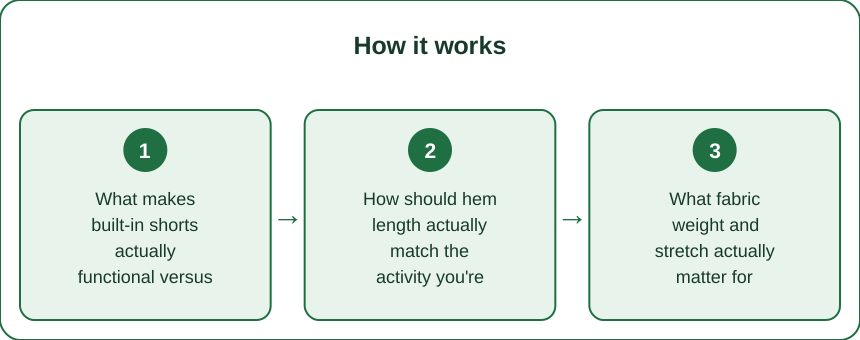
What makes built-in shorts actually functional versus just decorative?
Functional built-in shorts have a secure, snug leg opening (often with a bit of grip elastic) that stays in place through movement, rather than riding up or bunching — this is the single biggest functional difference between exercise dresses that work during real movement and ones that only look put-together standing still. Shorts that are noticeably shorter than the dress hem also reduce the visible “shorts peeking out” issue some people dislike, though this is a styling preference rather than a functional one.
When trying on an exercise dress, doing a few genuine squats, lunges, and arm raises in the fitting room is the real test — standing still tells you almost nothing about whether the built-in shorts will actually hold up.
How should hem length actually match the activity you’re doing?
For higher-movement activities like tennis or golf, a shorter hem (upper-thigh length) paired with well-fitted built-in shorts avoids fabric bunching during swings, lunges, and quick direction changes. For lower-movement activities like walking or casual yoga, a slightly longer hem is both comfortable and less likely to ride up during simple movement, and offers more coverage without sacrificing function.
Running and high-intensity interval training are the activities where hem length matters most, since a longer hem can genuinely interfere with a full running stride — shorter, more athletic-cut exercise dresses are specifically designed with this movement range in mind.
What fabric weight and stretch actually matter for different intensities?
Lower-intensity activities (walking, golf, yoga) work well with a broader range of fabric weights, including lighter, more flowy exercise dress fabrics. Higher-intensity activities (running, HIIT, dance cardio) need a four-way stretch, moisture-wicking fabric with enough structure to avoid excessive bounce or fabric shifting during fast, repetitive movement.
Checking the fabric composition for a reasonable spandex percentage (typically 15-20%+) is a good proxy for how well an exercise dress will hold its shape and stay put during higher-intensity movement, regardless of brand.
Does an exercise dress work equally well across different body types and shapes?
Yes, with the right fit approach — the key adjustment isn’t the dress style itself but choosing the right built-in short length and dress silhouette for your body and comfort preference, which varies individually rather than by a single body-type rule. An A-line or slightly fitted silhouette both work across body types; what matters more is whether the built-in shorts fit securely and the hem length suits your activity and comfort level.
Sizing up specifically in the built-in shorts (if a brand offers separate shorts and dress sizing) is a common and effective fix for anyone who finds the shorts portion runs tighter than the dress portion suggests.
Is an exercise dress actually practical for higher-intensity activities like running?
It can be, with the right specific design choices — look for a shorter, athletic-cut hem, secure built-in compression shorts, and a structured, supportive fabric specifically marketed for running or HIIT use, rather than a general-purpose casual exercise dress. Many runners do find a well-designed running dress fully functional for real training runs, though it’s worth trying a genuine run (not just a walk) in the dress before committing to it for race day or regular training use.
For extremely high-intensity interval work with a lot of ground-based movement (burpees, mountain climbers), a fitted top-and-short combination may still offer more confidence and coverage than even a well-designed exercise dress — this is a matter of personal comfort as much as function.
How do you actually style an exercise dress beyond just the workout itself?
A well-fitted exercise dress transitions easily from a workout directly into errands or a casual coffee stop without needing to change, which is part of its practical appeal beyond the activity itself. Adding a light jacket or cardigan over it extends its use into cooler weather or slightly more polished settings, without needing a separate outfit.
FAQ: Exercise Dress Questions, Answered
Do exercise dresses need to be sized differently than regular activewear tops or dresses?
Often yes, since built-in shorts fit can vary independently from the dress portion — checking a brand’s specific sizing chart for both components separately avoids the most common fit disappointment.
Can you wear an exercise dress for weightlifting or strength training?
Yes, generally, though for movements involving a lot of hip hinging (deadlifts, for example) a slightly longer hem or added underlayer can add confidence and coverage during the bent-over portion of the movement.
Is an exercise dress warm enough for outdoor activity in cooler weather?
On its own, usually not for cold conditions — layering with fitted leggings underneath and a light jacket over top extends an exercise dress’s usability into cooler weather without losing its core design.
TL;DR:
- Test built-in shorts with real movement (squats, lunges), not just standing still
- Match hem length to activity: shorter and athletic-cut for high movement, longer for low-key activities
- Higher intensity needs four-way stretch fabric with enough spandex to hold shape
- Fit adjustments (not avoiding the style) are what make exercise dresses work across body types
With the right fit and fabric choices, exercise dresses genuinely hold up across far more activities than they typically get credit for.
Keep Reading
This article is for general informational and styling purposes only. Fit, sizing, and product availability may vary.