The Complete Guide to Wearing an Exercise Dress into an Air-Conditioned Office
Quick Answer: An exercise dress works in an office when three things are handled: coverage of the built-in shorts while seated, a structured third layer that reads as workwear rather than sportswear, and a plan for the temperature difference between a warm commute and a heavily cooled room. Choose a dress in a matte, heavier-weight fabric with a hem that sits at or below mid-thigh when seated, add a blazer or knit cardigan and closed shoes, and keep a light wrap at your desk. The dress is rarely the problem - the vent above your chair usually is.
The appeal is obvious. One garment, no matching, moves easily, handles a lunchtime walk, and does not require thinking about at 6:40am.
The reality is a 26C street, a 20C office, a chair with a mesh back, and seven hours of sitting still. Here is how to make the whole day work.

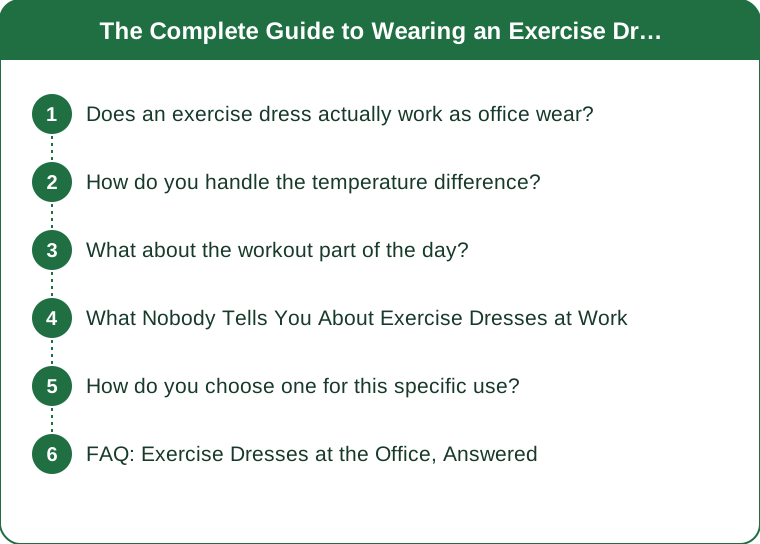
Does an exercise dress actually work as office wear?
In many workplaces, yes, with two adjustments. The two things that read as gym rather than office are shiny performance fabric and a visibly athletic silhouette. A matte fabric and a structured layer neutralise both, and what remains reads as a simple knit dress.
Fabric finish matters more than the garment category. A high-sheen polyester reads unmistakably as sportswear under office lighting; a matte, slightly heavier interlock or ponte-like fabric does not. If you are choosing a dress with this use in mind, finish is the first filter.
Weight does the second half of the work. Very light performance jersey clings, shows every seam, and moves in a way that looks unstructured when you stand up from a chair. A heavier fabric hangs, holds shape through a day of sitting, and is warmer in a cooled room, which solves two problems at once.
Colour changes the read substantially. Black, navy, deep olive, and charcoal read as clothing. Bright colourblocking, contrast piping, and visible branding read as kit regardless of what else you do to the outfit.
The built-in shorts are an advantage, not a compromise. They remove the entire question of what happens when you sit, cross your legs, or take stairs, which is a genuine advantage over an unlined dress of the same length.
Know your own workplace before generalising. Client-facing days, formal sectors, and specific dress codes are real constraints and no amount of styling changes them. This works best in business-casual and casual environments, and it works excellently there.
And check the seated hem length before the day, not during it. Sit on a hard chair in front of a mirror. That measurement, not the standing one, is the one that determines whether you spend the day adjusting.
How do you handle the temperature difference?
Assume a 5 to 8 degree drop from street to desk. Late-summer offices are frequently cooled to a level set in July and never revisited, so the building does not soften as the weather does. Plan for the room, not the forecast.
Keep one layer permanently at your desk. A cardigan, a wrap, or a light knit that lives on the back of your chair costs you nothing to carry and solves the vent problem completely. The layer you carry is the layer you leave at home eventually; the layer that lives at work is always there.
Structured third layer for the commute and meetings. A blazer, a longline knit cardigan, or a structured shirt jacket over the dress is what carries the outfit into professional contexts. Unstructured hoodies and zip-up performance jackets undo everything the dress was doing.
Legs get cold first, and that is where the dress is most exposed. Sitting still under cooling with bare legs is a different experience from wearing trousers. Opaque tights once the mornings turn, or a light throw at the desk, address the actual cold point.
Closed shoes rather than sandals. Cold feet under a desk make the entire room feel colder, and closed shoes also move the outfit toward workwear at the same time. A loafer or a low ankle boot does both jobs.
Watch the damp-fabric problem after a warm commute. Performance fabric that has absorbed sweat on a 26C walk becomes actively chilling once you sit in cooled air. A five-minute pause before sitting down, or a fabric with genuinely fast drying, matters more than it sounds.
And build the layer in, rather than bringing it as a rescue. An outfit designed as dress-plus-cardigan looks intentional all day; a cardigan added at 11am because you are freezing always looks like a rescue.
What about the workout part of the day?
Decide whether the dress is for the workout or for the office first. A dress that genuinely handles a hard training session is usually lighter and shinier than one that works at a desk. Trying to have both often produces a garment that is mediocre at each.
For walking, mobility, yoga, and light gym work, one dress does everything. This is where the concept earns its reputation, and the mid-weight matte version handles all of it comfortably.
For running or genuinely high-intensity work, plan on changing. Sweat volume, chafe risk, and fabric weight all point the other way, and sitting in the same dress afterwards is unpleasant regardless of how good the fabric is.
The built-in shorts are the chafe variable. Inseam length and fabric matter more than the dress itself here. A short liner that rides up on a warm day is the single most common complaint, and it is a fit issue rather than a design flaw.
Pockets change what is possible. A dress with secure thigh pockets covers a lunchtime walk with a phone and a card without a bag, which is a meaningful part of why people reach for it on office days.
Pack the return-to-desk kit, not the full gym bag. Deodorant, a small towel, and a comb handle a lunchtime walk. Building a full change into the day is what makes people abandon the whole approach in week two.
And be realistic about a warm afternoon. A dress worn all day through a warm commute, a walk, and a return will need washing that evening, not a second wear. That is a laundry consideration, not a failure.

What Nobody Tells You About Exercise Dresses at Work
Sitting is the real test, and nobody performs it in the shop. Every meaningful failure - hem riding up, liner shifting, fabric bunching at the waist, seams showing - happens seated on a hard chair, and every fitting room decision happens standing up.
Chair fabric changes everything. A mesh office chair grips performance fabric considerably more than a smooth one, which is why a dress that behaves at home rides up at work. If your chair is mesh, test on mesh.
The hem creases where you fold. A day of sitting leaves a horizontal line across the back of the dress in lighter fabrics. Heavier weights resist it; very light performance jersey does not, and it is visible when you stand for a meeting.
Static arrives with the season. Once the humidity drops in early autumn, synthetic dresses cling in a way they did not in August. A light fabric spray or an anti-static in-wash product handles it; nothing about the dress has changed.
Deodorant marks show more on matte fabric than shiny. The finish that makes the dress read as office wear is also the one that records a white streak from getting dressed in a hurry.
People notice the shoes, not the dress. Trainers make the whole outfit read as athletic no matter what else you do. Loafers, low boots, or a simple flat shift the entire perception, and it is the cheapest change available.
And it will not work in every workplace, which is fine. Knowing that a specific meeting or a specific week is not the moment for it is not a defeat; it is what makes it sustainable on the other four days.
How do you choose one for this specific use?
Filter for matte finish first. Hold it to a window or under a bright light. If it flashes, it will read as kit under office lighting no matter how you style it.
Check weight by holding it up. If you can clearly see the outline of your hand through a single layer, it is too light for a full office day and will show every seam and crease.
Measure the seated hem, not the standing one. Sit down in the fitting room. If the hem lands where you would be uncomfortable standing up in a meeting, the size or the length is wrong.
Check the liner inseam and fabric separately. A good dress with a poor liner is an uncomfortable day. Look for a liner that is compressive enough not to migrate and long enough to prevent thigh contact.
Test the neckline while leaning forward. Desk work involves leaning over a keyboard and reaching for things across a table. A neckline that works standing still and fails leaning forward is a daily irritation.
Prefer pockets that zip. Open pockets in a dress empty themselves when you sit, which is the majority of an office day.
And buy the layer at the same time. The dress and its structured third layer are one outfit, and buying them separately is how people end up with a dress they never wear because nothing goes with it.
FAQ: Exercise Dresses at the Office, Answered
Can you wear an exercise dress to work?
In business-casual and casual workplaces, yes - if the fabric is matte, the weight is substantial, the seated hem length is appropriate, and you add a structured layer and closed shoes. Formal or client-facing settings are a different question.
How do I stop being cold in an air-conditioned office?
Keep a cardigan or wrap permanently at your desk rather than carrying one, wear closed shoes, and add opaque tights once the mornings cool. Legs and feet are where a dress actually loses heat while seated.
What shoes make an exercise dress look professional?
Loafers, low ankle boots, or a simple flat. Shoes drive the perception more than the dress does - trainers make the whole outfit read as athletic regardless of everything else.
Will it work for a real workout?
For walking, mobility, yoga, and light gym sessions, comfortably. For running or high-intensity training, plan to change afterwards, and expect the dress to need washing rather than a second wear.
How do I stop the dress riding up when I sit?
Choose a heavier fabric, check the seated hem length before buying, and test on the same kind of chair you actually use - mesh office chairs grip performance fabric far more than smooth ones.
TL;DR:
- A matte, mid-weight dress in a dark neutral reads as workwear; shiny lightweight fabric reads as kit no matter how you style it.
- Check the hem length seated on a hard chair, not standing in a fitting room - that is where every real failure happens.
- Keep a cardigan or wrap permanently at your desk rather than carrying one, and wear closed shoes; legs and feet are where you actually get cold.
- A structured third layer - blazer or longline knit - is what carries the outfit into professional contexts.
- Great for walking, mobility, and light gym work; plan to change after running or high-intensity sessions.
- Shoes drive the perception more than the dress does, and they are the cheapest thing to change.
The dress is almost never the problem. The vent above your chair usually is.
Keep Reading
This article is for general informational and styling purposes only. Fit, sizing, and product availability may vary.